
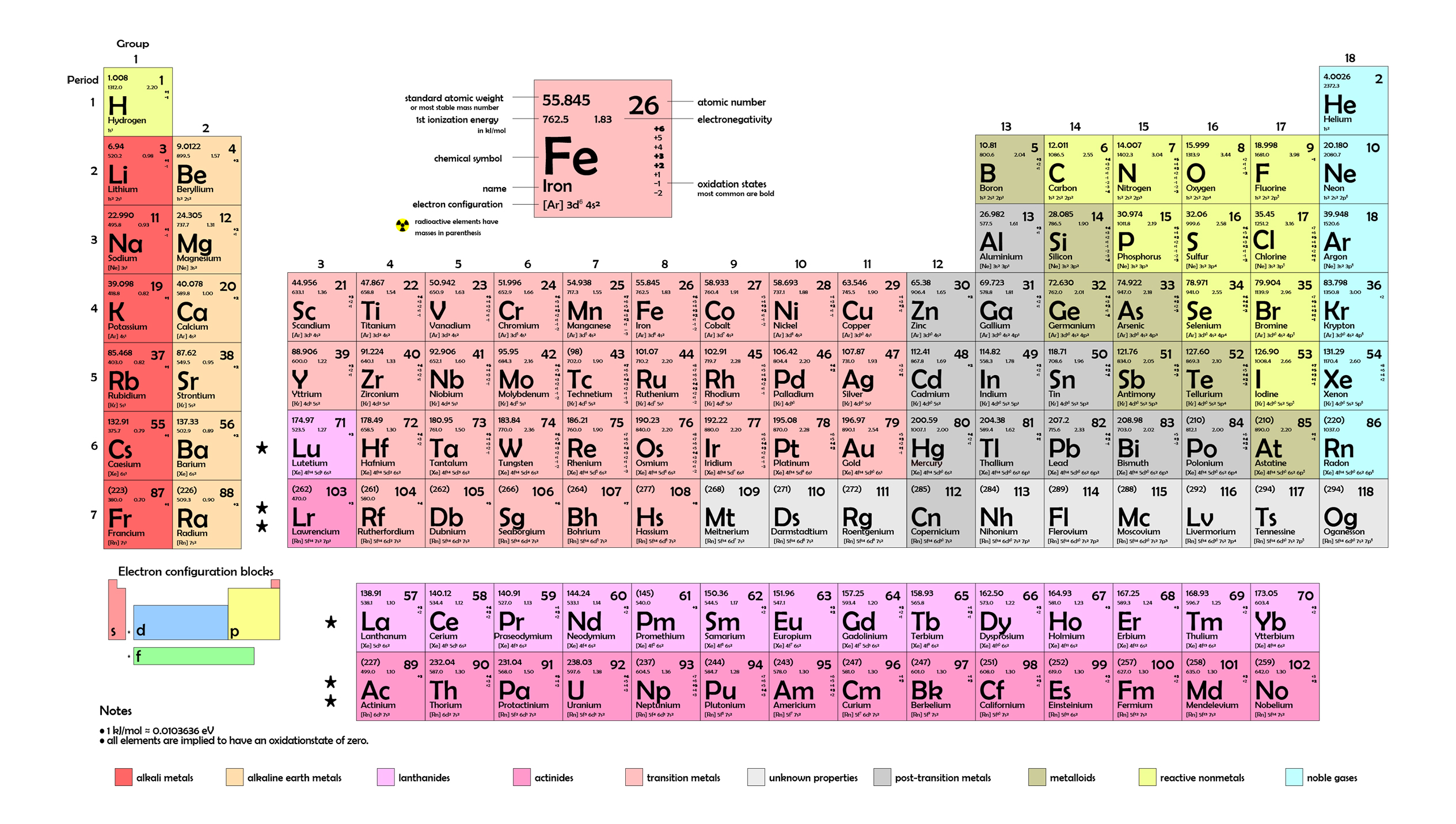
The Periodic Table of Elements is a systematic arrangement of chemical elements in order of increasing atomic number. The table is organized into horizontal rows called periods and vertical columns called groups. Each period represents the filling of a principal electron shell, while each group contains elements with similar valence electron configurations and comparable chemical properties.
The periodic law states that the physical and chemical properties of elements are periodic functions of their atomic numbers. Groups highlight families of elements such as the alkali metals (Group 1), alkaline earth metals (Group 2), halogens (Group 17), and noble gases (Group 18). Transition metals, inner transition elements (lanthanides and actinides), and blocks (s block, p block, d block, f block) further classify elements according to their electron configurations.
The periodic table reveals important periodic trends such as changes in atomic radius, ionization energy, electronegativity, and metallic character across periods and down groups. It provides a unifying framework in chemistry for predicting element properties, explaining reactivity, and guiding the discovery of new substances.
Traditional representation of the periodic table
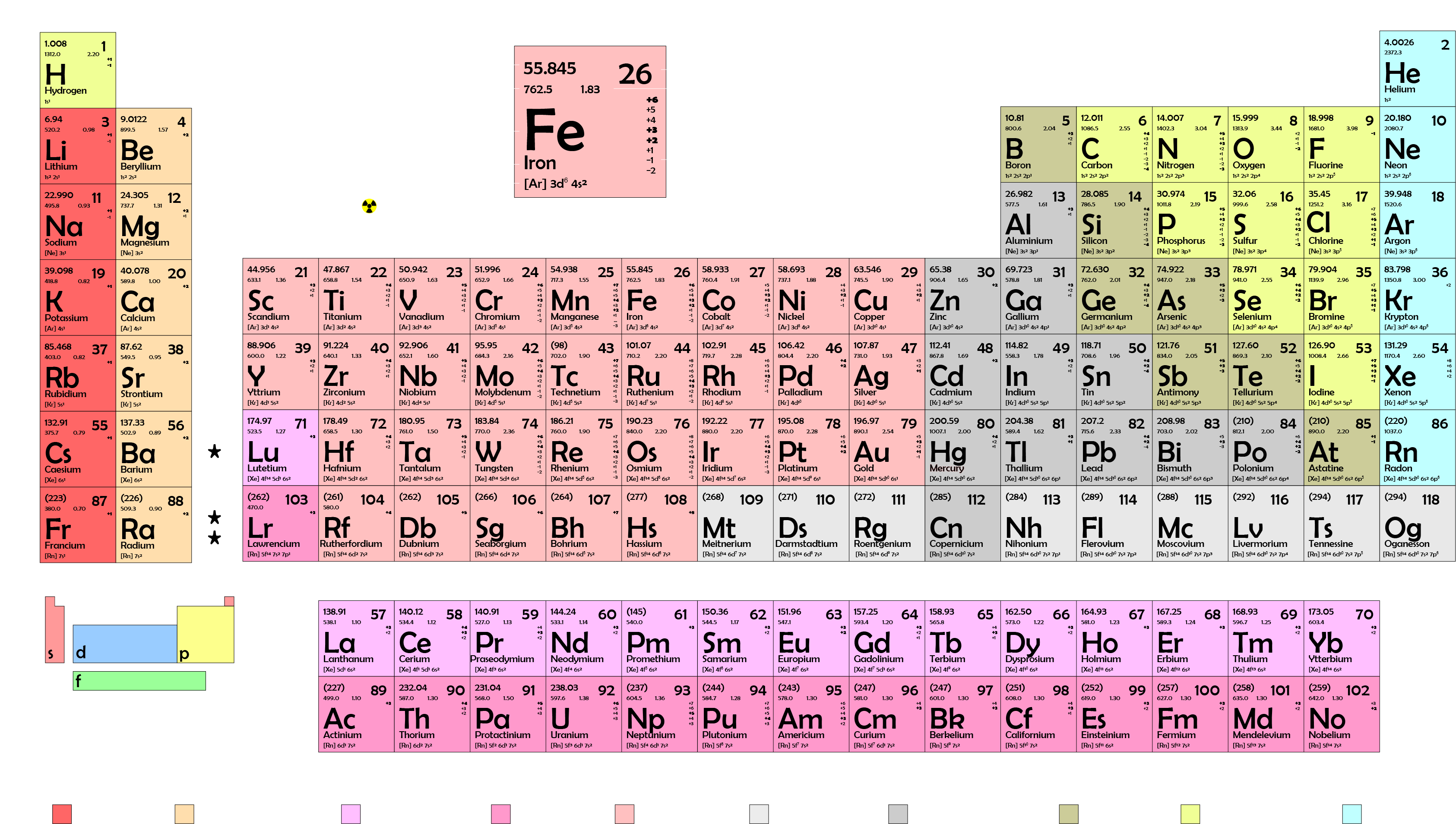
Interactive periodic table of elements
Click on an element to see more details.